Dungeons and Dragons and Giant Robots, part 5: Mecha Manufacturing

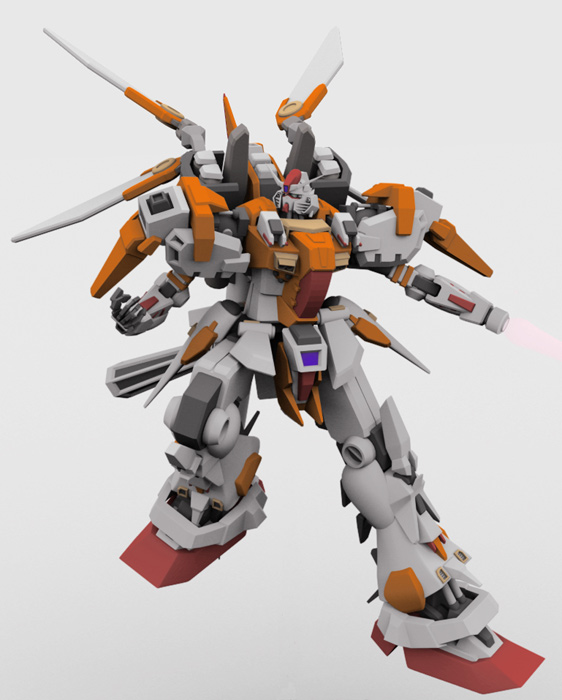
OZ MS

© Sunrise

In the previous posts in this series, I laid some groundwork for adapting D&D 4E to a mecha universe, establishing some basic stats and skills.

Let’s create some sample mecha units, using the stats we’ve defined so far.

The Stats We Need

If you recall, each mecha has the following stats:

  • Manufacturer, which corresponds to race
  • Class
  • Size
  • Speed
  • Initiative
  • AC
  • Fortitude
  • Reflex
  • Strength
  • Constitution
  • Dexterity
  • HP
  • Repairs

All of the above scores will be based off the manufacturer and class, so let’s start there.

Manufacturing a Giant Robot

The manufacturer corresponds to a PC’s race in standard D&D.  So let’s open up our D&D 4E Player’s Handbook and look at the stats for character races.

  • Average Height and Weight — Manufacturers don’t standardize on a particular height and weight for their merchandise.  This will depend more on the mecha’s class, so we’ll move this there.
  • Ability Scores — +2 to two scores. Mecha have half as many ability scores as a D&D PC, so let’s provide +2 to one score.
  • Size — This will be determined by class.
  • Speed — Also determined by class (Boeing doesn’t restrict itself to only fast aircraft).
  • Vision — Again, class-specific.  Less important on mecha, as we can assume all mecha have advanced infrared and other systems to see in the dark. So, let’s drop this unless there’s a specific need within the universe.
  • Languages — Not applicable to a mecha universe, unless you want some kind of translator unit.
  • Skill Bonuses — This we can keep, as long as we focus on physical skills.  Makes sense for a particular manufacturer to generally provide the same benefits to all products (“Apple’s products always have excellent UI; Sony’s products are always rugged.”)
  • Special Abilities — We can keep this, but to make sense within the world, it needs to feel like a feature that a particular company always puts into its products, like a specific backdoor or consistent password scheme.

Class

  • Average Height and Weight Moved from manufacturer. Pure fluff at this point.  I don’t want to get into weight restrictions a la Battletech just yet.
  • SizeMoved from manufacturer.
  • SpeedMoved from manufacturer.
  • Role — Just like in D&D.
  • Power Source — Not useful in most mecha universes.  There are definitely universes within which this would make sense, especially fantasy ones where different mecha are powered by different magic.  But we can typically ignore this.
  • Key Abilities — Just like in D&D.
  • Armor Proficiencies — We’ll keep this, as we can have a variety of different types of protection: physical, energy-based, and flak-based.
  • Weapon Proficiencies — Ditto. We can even use essentially the same weapon classes as D&D.
  • Bonus to Defense — Keep.
  • Hit Points at 1st Level — Keep.
  • Hit Points per Level Gained — Keep.
  • Healing Surges Per Day — Yes, renamed to Repair Operations
  • Trained Skills — This doesn’t make sense for a mecha — how would a new type of mecha make you better at history?
  • Build Options — Keep.
  • Class Features — Keep.

Sample Manufacturer

Seinar Systems

Initially a maker of luxury space craft, including pleasure yachts and high-end shuttles, Seinar has branched out into military manufacturing while retaining its trademark elegance and speed.

Ability Modifier: +2 to Dexterity

Skill Bonuses: +2 to Acrobatics, +2 to Athletics

Dexterous Movement: Manufacturer At-Will Power: Minor Action: Shift up to 2 squares.

Sample Class

Freedom-Class Mecha

  • Size Medium
  • Speed 7
  • Role Striker
  • Key Abilities Dexterity, Strength
  • Armor Proficiencies Energy-based
  • Weapon Proficiencies Simple melee, military melee
  • Bonus to Defense: +2 Reflex
  • Hit Points at First Level 13 + Dexterity modifier
  • Hit Points Per Level Gained 5
  • Repair Operations Per Day 9 + Dexterity modifier
  • Build Options None yet
  • Class Features
    • Sure Strike: Class At-Will Power: Standard Action
      Attack: Dexterity +2 vs. AC
      Target: One mecha
      Hit: 1[W] + Dexterity modifier damage.
    • Jarring Strike: Class At-Will Power: Standard Action
      Attack: Dexterity vs. AC
      Target: One mecha
      Hit: 1[W] + Dexterity modifier damage, and target is stunned (save ends).
    • Anti-Ship Prejudice: Class At-Will Power: Standard Action
      Attack: Dexterity vs. AC
      Target: Capital ship
      Hit: 2[W] + Dexterity modifier damage.

There we go. We now have a sample race and class for mecha.  In the next post, we’ll talk about PCs.

Can It Grow?

This month’s RPG Blog Carnival over at Mad Brew Labs is on Growing the Hobby. I quote:

While I don’t think the hobby is disappearing, by any means, I don’t see it expanding by leaps & bounds either. I’d personally like to see it grow, and I would like to hear what the RPG Blogosphere has to say.

“Blogosphere.” :shudder: I so hate that word. Ah well;  not their fault.

Can It Grow?

"Sprout is now growing up" by BONGURI on Flickr

"Sprout is now growing up" by BONGURI on Flickr

Not to be negative, but I honestly suspect that there’s little room for growth in the RPG industry. And that’s okay.

I originally wrote half a dozen long paragraphs describing each demographic’s limited potential for RPG sales, then remembered that demographics are a terrible way of measuring anything these days.

So let’s put it this way: What itch does an RPG scratch?

Players get the ability to live the life of a more interesting person, in a way that is deeply interactive and long-form.  GMs are able to create worlds and tell complex stories.

Quick, walk into a sports bar, and find me somebody who wants to put a lot of thought into crafting a long-form story.  Find me somebody who wants to give up one night a week to sit around with a bunch of friends and actively use their imagination.

Most folks just don’t value that. Sure, they’ll watch a fantasy movie — because they’re watching it.

This is not a dig against “mundanes.” Most people just don’t value the same things that geeks value.

How To Grow It?

I can think of a couple of things.

One: The vast majority of RPGs focus on geek settings. I challenge you to find an RPG setting or product that doesn’t assume at least a fantastic or science fiction element.

(I always found it telling that the example shows in Primetime Adventures, which is about creating dramatic TV episodes, skews strongly towards SF/F shows like Buffy the Vampire Slayer.)

What if there was an RPG where you play a basketball star?  Or a private investigator?  Or a nurse in an ER?

Two: The systems have to be simpler and require fewer materials. There are only so many people in the world willing to go out and buy special dice for a game. (And since when was that considered an acceptable additional cost of playing a game? Board games don’t assume this; they come with the dice, board, etc.)

Three: The games have to provide a stronger initial punch. Most folks don’t want a multi-year commitment out of their game; they want Scattergories. Character creation (for most) is work with no obvious, direct reward.

Imagine an RPG that comes with two dozen vibrant, pre-generated characters and a dozen well-crafted, quick adventures. Want to play an adventure in an hour or two?  Grab a character and go.

I’m sure there are others. How would you grow the hobby beyond the folks who already play it?

Homemade Stuff

"Cooking" by HilaryQuinn on Flickr

"Cooking" by HilaryQuinn on Flickr

I like to make my own stuff. I’d love to make my own furniture, clothes, etc., and I’m starting with food and daily household items.

Here’s what I currently make myself:

  • Food (very little homemade in the past few weeks, as I focus on finishing up my RPG materials for the month)
  • Laundry detergent
  • Fabric softener — I use 1/4 cup of baking soda in the basin and 1/4 cup of vinegar in the dispenser.
  • Dishwasher detergent — Unfortunately, it leaves spots. Big, obvious spots. Haven’t found a solution.
  • Vegetable wash — Vinegar and water, I think in a 1:4 ratio.

Things I’d like to make myself:

  • Granola bars — Done it before, and I’d like to replace the Clif bars I eat every morning.
  • Cookies — I like to take tea in the afternoon at work, and homemade chocolate chip cookies are the perfect accompaniment.  Used to do this a lot; haven’t done it in months.
  • Yogurt — To replace the  yogurt I always eat in the morning. I actually already made this; I’ll try to remember to blog about it shortly.

None of this is difficult, or consumes large amounts of time. It’s just easier, quicker, more expensive, and less satisfying to grab a box off a grocery store shelf.

Dungeons and Dragons and Giant Robots, part 4: Skills and Feats

This is part 4 in a series of posts about an RPG system that uses D&D 4E mechanics for a giant robot system.

D&D 4E simplified the skill list dramatically. Let’s look at each one, and figure out which ones can be transferred to a giant robot combat universe directly, which will need to be tweaked, which must be dropped, and what we must add.

  • Acrobatics – OK
  • Arcana – Not a fit. Mecha characters rarely tap into mystical energies, but they do often tap into computer systems.  So let’s replace this with Hacking.
  • Athletics – OK
  • Bluff – OK
  • Diplomacy – OK
  • Dungeoneering – Nope. Let’s replace this with something like Cosmonautics — knowledge of technology and engineering used in outer space.
  • Endurance – OK
  • Heal – OK
  • History – Keep it, though it’s likely less useful.
  • Insight – OK
  • Intimidate – OK
  • Nature – Keep it, but expand it to include knowledge of space habitats and such.
  • Perception – OK
  • Religion – Nope (remember, it’s SF, so we’re all rationalists in the future). But if Religion tracks a character’s knowledge of religion, how about a skill that tracks knowledge of mecha systems? Let’s say Nerdiness, in honor of that blonde military otaku in Full Metal Panic!
  • Stealth – OK
  • Streetwise – OK
  • Thievery – OK

I’d also add Martial Arts to this list — the ability to defend oneself in unarmed combat.

In terms of feats, it’d be a waste of time and space to list every single feat that won’t apply to a mecha universe. But let’s identify a few feats that’d be particularly useful:

  • Massive Machinery Operation — The ability to pilot and operate spaceships, doomsday weapons, etc.
  • Mecha Intuition — You can learn to pilot an unfamiliar mecha with surprising speed (halve the negative penalties on attack rolls when piloting an unfamiliar mecha).

Your Focus Needs More Focus

LOOK AT ME WITH STARRY EYES PUSH ME UP THE STARRY SKIES

by Niffty.. on Flickr

This line from the 2010 remake of The Karate Kid (“Your focus needs more focus”) has been spinning about my head lately, as I went through another round of reducing my active projects.

Great things come through focus. Demonic focus, as Tom Peters calls it.

But focus doesn’t mean 18 hours of work every day. It means concentrating on one and only one thing at a time.

Now, I’d be the last person to suggest that you should only do one thing forever. I love accomplishing many different creative projects over time.

But I’ve found that I need to be able to put aside all projects but one, and focus on the next deliverable, and concentrate on that until it’s done. Then move on to something else.

And this doesn’t mean that I spend every waking hour working on that one project. I’ll also read, and watch movies, and work in the garden, and play RPGs on Google Wave.  I’ll still very much take care of the little things.

The big things take focus.

Dungeons and Dragons and Giant Robots, part 3

In the first post in this series, I laid out some basic ideas for a role-playing system for playing in giant robot universes, using a straight port of the D&D 4E system. In the second post, I defined basic stats and attributes for PCs and their mecha.

Today, I’m going to lay out the stats needed for a mecha, and the stats needed for a PC:

Mecha Character Sheet

  • Name
  • Manufacturer — Corresponds to race
  • Class
  • Size
  • Speed
  • Initiative
  • Defenses
    • AC
    • Fortitude
    • Reflex
  • Ability Scores
    • Strength
    • Constitution
    • Dexterity
  • HP
  • Sparking
  • Repair Value
  • Repair Operations Per Day
  • Weapons
  • At-Will Powers

While we’re at it, let’s define a PC sheet:

Player Character Sheet

  • Name
  • Level
  • Military Organization
  • Class
  • XP
  • Speed
  • Initiative
  • Defenses
    • AC
    • Fortitude
    • Reflex
    • Will
  • Ability Scores
    • Strength
    • Constitution
    • Dexterity
    • Intelligence
    • Wisdom
    • Charisma
  • Passive Insight
  • Passive Perception
  • HP
  • Bloodied
  • Surge Value
  • Surges Per Day
  • Action Points
  • Weapons
  • Skills
  • Feats
  • Encounter Powers
  • Daily Powers
  • Utility Powers

Dungeons and Dragons and Giant Robots, part 2

GundamIn my previous post on this topic, I suggested a few basic rules for a giant robot RPG system using the basic D&D 4E rules.

Let’s review the rules so far:

Mecha operate on a scale 10x that of the human scale. So, mecha weapons do 10x the damage of a human weapon, mecha are about 10x bigger than humans, etc.

Mecha combat occurs on its own grid, which does not represent individual human units.  Similarly, human-scaled combat does not show mecha units.

Pilot characters have all six stats, while mecha have only Strength, Constitution, and Dexterity.  Any mecha attacks targeting those three stats are assumed to be targeting the mecha’s stats, rather than the pilot’s.  All other attacks target the pilot’s stats.

Mecha have Reflex and Fortitude defenses, but no Will defense.

Mecha have at-will powers.  PCs have encounter and daily powers.

I’ve received some feedback suggesting that I keep full stats for both mecha and pilots.  It’s an interesting idea, allowing for attacks that target a mecha and different ones that target the pilot inside. However, if I do that, then the DM and players will have a much larger workload.  Each attack must specify whether it’s targeting a mecha’s defense or a PC’s defense, and DMs and players will have to keep track of all those stats.  I may go in that direction, but I’m going to hash out some examples before I decide.

Now, let’s talk races and classes.

Racial Profiling

D&D is built on the premise that the world contains many intelligent races. In contrast, most mecha anime series have at most one non-human race: Macross/Robotech has Zentraedi, Gundam Seed has Coordinators, and U.C. Gundam has Newtypes (if you want to push the concept of Newtypes that far),.

I can see two obvious solutions to this:

  1. Live with it. Any given mecha universe may only include one or two races.
  2. Replace race with military organization. You choose the military organization that trained you, and this affects your stats in the same way that race does in D&D.

I like the latter, so we’ll go with that except in universes that legitimately include several playable races/species.  So:

PC race is replaced with “military organization,” which reflects the military group that primarily trained the PC.

Class can remain unchanged.  Obviously, there will be different classes, but the mechanics will work the same.

What Species is a Giant Robot?

A mecha’s race must be represented by its manufacturer.  Different companies manufacture mecha to different specs.  Makes sense.

Class corresponds to the mecha’s intended role in combat.  Just like other military machinery fill certain roles (fighter vs. bomber), mecha have roles as well.  The term “class” makes sense for mecha, so we’ll keep that.

Mecha race is replaced with “manufacturer.” Class remains unchanged.

Okay, so race/class now falls out as follows:

  • PC Military Organization
  • PC Class
  • Mecha Manufacturer
  • Mecha Class

(I will note there that I dislike the term “class” in general. It’s vague, making it unhelpful; it might as well be called “category” or “set.” Terms should add flavor to the world. I’d be tempted to replace PC class with “specialty” and Mecha class with “role,” but that would confuse all those D&D players out there.  And since this is meant to be a D&D 4E conversion, I’ll stick with “class.”)

Can a Giant Robot be Bloodied?

Le’ts fix a few naming issues while we’re at it.

Giant robots don’t get bloodied, and you don’t heal a 20-ton war machine. So:

The term “bloodied” is replaced with “sparking,” and the term “healing surge” is replaced with “repair operation.”  Mechanically, they work the same.

Confusion

This is getting complicated. Character creation in D&D 4E consumes enough time as it is. Now we have to generate a mecha, too?

Well, let’s make it easy.  The system description document will include a bunch of pre-generated mecha. Players can generate mecha from scratch if they want to, but beginners will be encouraged to just pick a pre-generated mecha.

So that’s more of a design goal: Develop a bunch of mecha for players to pilot.  In the next post in this series, we’ll create a basic blank sheet of stats and fields for mecha, as well as one for PCs.

Into the Jungle

"Lion at sunset" by Rob Inh00d on Flickr

"Lion at sunset" by Rob Inh00d on Flickr

I’ve been trying to nail down one international trip this year.  Was trying to find a good trip to Greece or Italy, but every itinerary was jam-packed with activities. I wanted more freedom.  (Don’t we all?)

Then I saw a deal on a trip to Africa.

So, if all the paperwork goes through, I’ll be going to South Africa this October, from the 6th through the 15th.  I’ll be spending about half the time in Cape Town, and the rest in a game preserve, photographing wild animals.

It’ll cost a bit more than I had planned to spend on my trip this year — a bit over $4,000 on airfare, hotels, and all that — but, c’mon, it’s a week in Africa, staying at high-quality accommodations.  I’ll find a way to pay for it.

New Floors

"cherry" by erix! on Flickr

"cherry" by erix! on Flickr

This is a completely personal post.

I had new hardwood floors installed this past weekend, covering my entire upstairs and the stairwell.  It was expensive, but my house looks fantastic. Oddly, walking into an office with a cherry hardwood floor (even if it is laminate cherry) just feels right.

It also feels exhausting. I didn’t install any of it, but I had to prepare: moving 4 bookcases worth of books downstairs, as well as various delicate pieces of equipment, models, etc.  All the pictures had to come off the walls, too, and with several dozen framed anime cels, that took a while.  Afterwards, not only did I have to move everything back, a thick layer of sawdust covered all of it, so I had to clean it, as well.

Tired? Yes. Worth it? Absolutely.

Especially after seeing The Karate Kid. That’s one solid film: a strong and quiet story, involving actors, beautiful cinematography (is it just me, or have more films recently featured excellent cinematography?), and a moral philosophy that’s actually reinforced by the events of the film.

Dungeons and Dragons and Giant Robots, part 1

Gundam Robot

Gundam Robot by kcherif on Flickr

Last weekend, Saalon and I discussed a straight conversion of D&D 4th Edition for a universe of anime-style “real robot” giant robot combat. So, more like the serious war stories of Gundam than the goofy fistfights of Gigantor.

Scales of War

The first problem is one of scale. Giant robots operate weapons that can pulverize many individual soldiers in one hit. So, let’s identify a rule:

Mecha operate on a scale 10x that of the human scale. So, mecha weapons do 10x the damage of a human weapon, mecha are about 10x bigger than humans, etc.

As a result, mecha combat cannot properly include individual human units, and mecha units are simply too large to represent accurately in human combat. Humans can be grouped into units large enough to represent at mecha scale, and mecha units may be representable as abstract forces, but for now:

Mecha combat occurs on its own grid, which does not represent individual human units.  Similarly, human-scaled combat does not show mecha units.

Okay, so you have pilots inside mecha.  Here comes our next big problem: the player controls both a pilot character and a mecha.  Do both get stats?  Do both get powers?  How does one influence the other?  Does a character’s Constitution really have any affect on piloting the mecha?  Even more, do we want to simulate reality that closely?  Should a mecha have a Will score?

First, let’s think about the six basic stats.  The three body-related stats — Strength, Constitution, and Dexterity — all make sense for a mecha.  The three mental stats — Intelligence, Wisdom, and Charisma — don’t.   So:

Pilot characters have all six stats, while mecha have only Strength, Constitution, and Dexterity.  Any mecha attacks targeting those three stats are assumed to be targeting the mecha’s stats, rather than the pilot’s.  All other attacks target the pilot’s stats.

For defenses, we’ll take a similar tack:

Mecha have Reflex and Fortitude defenses, but no Will defense.

Powers

How about powers?  Well, let’s think about them for a second.

At will power are everyday attacks and maneuvers.  They do a little more damage or otherwise provide a minor advantage over a straight gun shot or beam sword swing.

Encounter and daily powers are special moves, only used when the situation is dire.  Examples in anime include a Seed Break in Gundam Seed and Berserker Mode in Neon Genesis Evangelion.  Those are represented as special abilities that come from within the pilot.

So, here’s something different:

Mecha have at-will powers.  PCs have encounter and daily powers.

This actually works nicely with the standard level progression in 4E.  Mecha provide an array of first-level at-will powers; the basic stuff that this mecha is good at.  As your PC progresses, he or she picks up new maneuvers (encounters and dailies) that he or she can do regardless of the mecha piloted.

At some point, I’d like to add certain mecha encounter and daily powers that are only available to players at levels 10 or 20.  But for now, we’ll keep it simple.  Mecha only provide basic at-will powers.

More later as I think through this.

I work for Amazon. The content on this site is my own and doesn’t necessarily represent Amazon’s position.