Change The Way You Read

[IMAGE]

Forgot to mention: I have a Kindle DX.

Not sure how to describe it, as I’m not sure how much you all know about Kindles. Where to start?

The Kindle is Amazon’s electronic book reader. The DX is the latest in their line, and larger than the previous Kindle 1 and Kindle 2. The screen’s 9.7 inches along the diagonal, compared to earlier Kindles’ 6-inch screens. So the DX is more like a hardback book, while the others are more like paperbacks.

Which is not an unqualified difference. The K2 is a tad lighter, and thus a little easier to hold, but has a smaller screen.

Basic functionality: you read books on it (duh!). There’s a Sprint cell modem on it, so anywhere one can get a Sprint signal, one can access Amazon’s e-book store and buy more books. E-book prices are averaging $5 to $10 each at the moment.

While my initial interest in the Kindle cooled after six months, it’s ramped back up since then. And not just because of the DX. About nine months in, I found myself reading more than before. It’s just so convenient to always have a book with you, which can always become any book. Or magazine or newspaper (the selection grows). The DX makes the whole experience more pleasant, as magazines and newspapers just fit onto it better.

I use it constantly, and for a bibliophile, what better endorsement is there?

Why ZZ Gundam Might Be Worth Watching, Maybe

[IMAGE]

Spoilers are hardest in this review. My enjoyment of this show hinges on several characters and plot points that reference the previous show. So, the first part of this review has no spoilers, and the last half will be clearly marked as spoiler territory so I can explain my love.

I’ve enjoyed every Gundam series I’ve seen. Each is fun in its own way, of course; Gundam spans a surprising variety of philosophies and tones.

While I enjoyed ZZ Gundam, it’s the most difficult for me to recommend. It doesn’t fit traditional categories of worth or enjoyment. It starts out lighthearted, more in the vein of an adventure show for tweens. The protagonists exhibit minimal angst or emotional problems; they basically go on weird adventures for the first half-dozen episodes. Then, halfway through, the show delivers possibly my favorite episode in Gundam; it gets serious and dramatic and downright painful, which the show returns to frequently throughout its second half.

But that’s not to say that ZZ Gundam starts goofy and turns serious. It’s a trend. It’s fun throughout; there are just more serious moments in the latter half.

[IMAGE]

I also have trouble recommending this show because of the villains. They’re just completely flat and uninteresting. From a stale rip-off of Char Aznable (supposedly, this character was supposed to be Char, but Tomino got a green light on his later Char’s Counterattack movie as he wrote ZZ, so he substituted this character for Char), to a spastic woman wearing dominatrix gear who occasionally flashes her breasts at the audience, to the sadly one-note presence of Haman Khan, the various Neo-Zeon antagonists never appear threatening.

The show begins literally hours after the final moments of Zeta Gundam. The main ship limps into port at Side 1, and gets involved with a group of rough-and-tumble teens, who become the protagonists of the show.

And it is odd. We basically watch these kids stumble around for a good chunk of the show. They’re no big fans of the Federation. The central pilot, Judau, is a typical passionate shonen teen, full of bravado. His friends are also similar shonen characters. In fact, not long into the show, Judau’s sister falls into the hands of Neo-Zeon, and I think this was the only way to keep Judau and the others fighting.

SPOILER WARNING

Then, halfway through the show, Judau finally re-unites with his kidnapped sister. Briefly.

He finds his way into a Neo-Zeon stronghold and grabs his kidnapped sister. Guards open fire, and a shot hits his sister in her side. They escape, Judau hiding his sister in a nearby hut while he returns to his Gundam to fight off the Neo Zeon forces chasing them. Judau then takes out a mecha which crashes directly on his sister’s hut, which explodes in fire and metal scrap. Judau lands, unable to believe she’s dead, and paws through the wreckage while the ten-year-old girl he rescued earlier drags at his arm, crying, “I’ll be your little sister from now on.” At which point he turns and slaps her across the face. And she collapes in a crying heap.

It’s an episode of pain and pathos. Perfectly done. It works.

[IMAGE]

Which is a relief because ZZ is a mess. It’s a jumble of drama and comedy, of laughable villains and stock protagonists. But when it starts to fire on all cylinders, it barrels along with an intensity rarely matched in any other Gundam show before the turn of the millenium.

One of my favorite aspects of this comes in the form of Kamille Bidan, the protagonist of Zeta Gundam. He appears in ZZ, still a shattered, catatonic shell after the events of Zeta. In an episode about two thirds of the way through ZZ, the characters end up in the same city where he’s recovering in the hospital. He now shifts uncomfortably in his coma.

During an episode involving at least four Newtypes (people who’ve developed mild psychic powers), Kamille leaps to his feet and runs from the hospital, still incoherent and unable to recognize even his girlfriend. He flees down the coast to observe the battle which he can clearly sense.

The battle rages on, the pilots fighting on multiple fronts, separated and searching for one another. Suddenly, a voice speaks in their heads, calmly informing them of each others’ whereabouts and situations. We cut down to the beach, and Kamille sits there, staring at the flickering lights of battle overhead. You know he was the one speaking. You know he’s okay, somewhere in his head.

Especially after the emotionally exhausting end of Zeta, to see that Kamille is on the mend and would be okay is a huge relief.

An odd thing to mention, perhaps, in a review of ZZ–the treatment of a character from a different show. But it shows just how sensitive Tomino is to his characters and his audience. He knows who we care about. Of course, it also says something about how little I ended up being emotionally involved in the actual protagonists of ZZ.

And the characters are what make ZZ work, in the end. There’s a big battle at the end, of course, and despite the muddy execution, I felt good about who fought whom, and who won. It also has possibly my favorite death in Gundam, mainly because of the poetic justice of it all. Again, this is Tomino knowing how to treat his characters right.

Overall? The show is as muddy as this review. There are plenty of things to dislike about it. But, despite that, I enjoyed ZZ, I’m glad I watched it, and I wouldn’t mind watching it again. There’s some good stuff here.

The New Workers

[IMAGE]

I was reading a Wall Street Journal article about the problems of graduating college this year. The author points out that, with the economy, job seekers will have to either make less than they anticipated, or start in a different industry than they wanted to.

Good.

We no longer live in a society where you can graduate and immediately make $40K a year. That was called a bubble, and it’s burst.

And about changing industries: every single person I work with is doing a different job than the one they went to college for. Some still work in a similar industry—a nurse becoming a manager at a pharmaceutical company, for example—but none of them are doing what they planned.

Listen, all you graduating seniors: Grab this opportunity.

  1. Learn rigorous financial scrutiny. Watch every dollar you spend. Literally, record every purchase and compare it to your other purchases. Don’t worry; you won’t have to do it forever. But this will keep you from becoming like my generation, which bought more than we could afford.
  2. Explore the job world. Your goal right now is to get as many job offers as possible. So, apply for jobs you never thought you’d want. What’s the worst that can happen? You can always politely decline their offers. You can find some fantastic people to work for, and you can learn skills that you’d never get in your intended industry. Heck, why not take a 3-month job in a weird industry?
  3. Meet a lot of people. Make a big network of friends and acquaintances. You don’t have to like all of them. But many of them will be useful, and the bigger the pie, the bigger the slice.

In general: Take advantage of this. Please.

If you want a job, drop me a line, and I’ll try to hook you up with someone.

How Much Planning Do You Need?

I started reading a Kindle book on organic gardening. And I was immediately put off by 1) the repeated sermons on the evils of chemical pesticides (if I’ve bought the book, I probably don’t need to be sold on avoidance of chemicals), and 2) the insistence on planning. I quote:

The Essential Guide to Organic Gardening: …adequately allocate the proper space to your organic vegetable garden. The amount of space you decide to use for your organic vegetable garden must be sufficient, but not in excess; you do not want wasted space or wasted vegetables, because you grew too many.

On one hand, this makes sense. Don’t over- or under-produce, if you can help it.

On the other hand, how on Earth can the beginning gardener know what is “sufficient” or “excess?” Will the book attempt to tell me? What author can possibly tell me how many tomatoes I need?

Should one plan? Sure. But only approximately. Especially in a garden, where so little is under your control. Plan out your exact potato usage over the year, then watch half your potato crop fail.

Why can’t we just experiment? Approximate our needs and then go for it? It’s not like the average American homeowner is going to starve because their backyard organic garden produced insufficient quantities of cucumbers. And if you have too much, why can’t you give some away? I don’t think I’ve ever had trouble giving away food to co-workers and friends.

There are too many variables. Just grab a bit of land, dig in some good soil, plant a few seeds, and water it occasionally. This is my first year with a real vegetable garden, and I’ve got more lettuce than I can eat growing from a 2’x3′ plot.

Has Star Trek Lost Its Way?

As I mention in this YouTube review, I had a grand time watching the new Star Trek movie. Afterwards, I started thinking about it, and I had second thoughts.

What do you think?

Hitting the “Pause” Button on Giant Armors

[IMAGE]

Those of you familiar with my Giant Armors project may wonder how it’s going.

It isn’t.

I’ve been stuck for months. Not with writer’s block, exactly. I’ve known what needs to be done, I’ve just had no creative juice for it.

It’s weird. I know how to sit down and work at writing. I know how to burrow my way out of landslides of doubt and dead ends.

This feels different. I feel like I’ve outgrown the idea.

We’ve all done this. We come across an idea we had years ago for some project, and we wonder why we ever wanted to do it. It just seems so…wrong for us now.

I don’t know if Giant Armors is wrong for me yet. It feels like an idea half-formed, that needs more gestation. Perhaps I started too early. Perhaps I haven’t given it enough attention. However, whenever I give it attention, nothing usable comes.

So, I’m setting it aside. Like a favorite outfit that’s out of season, Giant Armors is going in mothballs for a while. I’m giving it about six months before I’ll force myself to revisit it.

I just…it frustrates me. I want to be able to slam through whatever problem I have. Win by persistence and dedication. All that great samurai stuff.

Do I need more dedication? I don’t know. I just don’t know.

I do know the danger of having too many projects going at once. And while I’m now clearing this from my plate (for now), is that just another way for me to do more stuff? Is this just the easier path?

I don’t know. I can’t process it logically, I can’t feel what’s right, and my gut isn’t leading me in any direction.

So, I’ll simplify. And look at it again once I’ve rested.

Why Mobile Suit Zeta Gundam Is Worth Watching

[IMAGE]

Note: This is the second in my series of articles on each show in the Gundam franchise. I don’t have a specific schedule for this; I’m just writing these reviews as I feel like it. The last one was Why You Should Watch Mobile Suit Gundam.

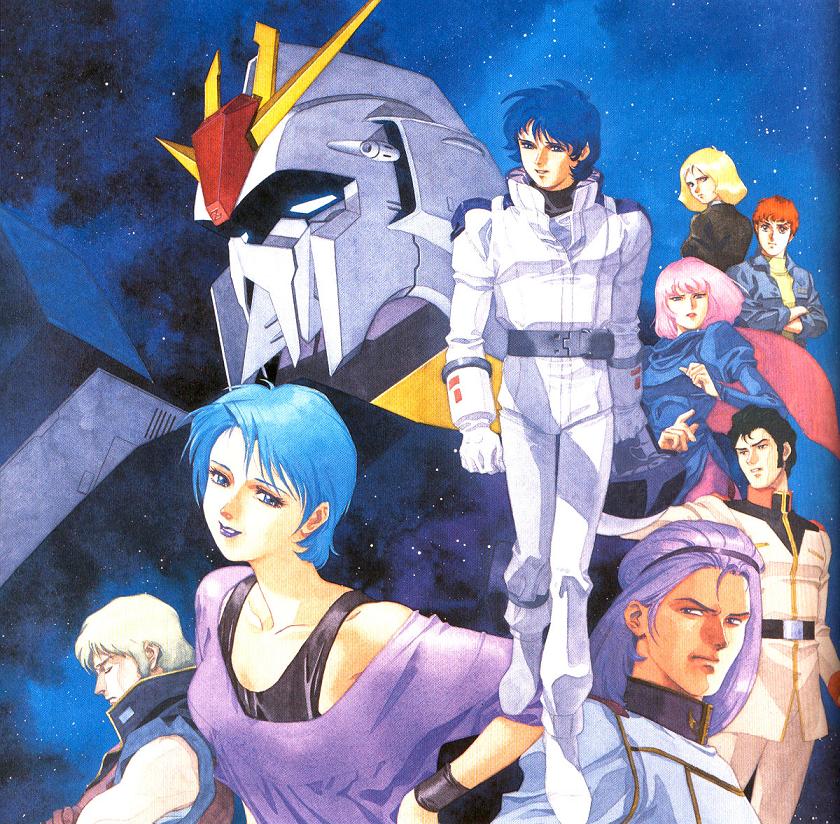
Four years after the broadcast of the original Mobile Suit Gundam (which was not particularly popular during its broadcast), and the increasing popularity thereof thanks to the three movie compilations released afterwards, Sunrise produced Zeta Gundam. It’s set 7 years after the end of Mobile Suit Gundam, and introduces a mostly new cast of characters and giant robots. The One Year War is over, and heroes must rise to face new problems.

And the cast of Zeta is one of its best aspects. Nearly every character has a role to play, in illustrating an ideal or pushing another character in some important direction. And this with a very large cast of several dozen characters.

Whereas MSG takes place during the final months of the One Year War between Earth and Zeon, Zeta‘s primary conflict is a guerilla war. The Earth Federation military has been taken over by a ruthless, Nazi-like military faction called the Titans, which the protagonists are fighting to stop.

This is a bit of a problem, actually. Zeta doesn’t have quite as tight of a narrative drive as Mobile Suit Gundam did. In the earlier show, the overall state of the war helped to drive the plot of the story, and often directed the characters’ next actions. Because Zeta concerns itself with a series of small military skirmishes, its plot doesn’t feel like it’s building to a big story climax. While there is very much a big climax, the overall guerilla war—though it escalates—doesn’t hold together the way a large war with major military offensives does.
Zeta Gundam artwork

As a result, Zeta spends more time on character moments. When I think about Zeta, I think about conversations between characters as much as I remember cool mecha action. This show contrasts its characters, and isn’t afraid to present characters with whom we only sympathize some of the time. Kamille, the protagonist, is a fascinating study in light and dark: he’s impetuous and vain, but absolutely dedicated to ideals of justice. While Amuro spends most of MSG agonizing over his choice of being a pilot, Kamille makes his peace with that choice early on.

A few other characters show up, and this is another example of Zeta’s strengths and weaknesses. Char works with the “good guys” now, which is awesome; we get to spend more time with a complex character who has multiple allegiances. But he’s now merely an excellent pilot, as opposed to being unquestionably the best pilot alive as he was in MSG. Sure, he’s in hiding and doesn’t want to show off, but those skills would inevitably appear during life-or-death combat.

So it goes with the re-introduction of Amuro, who joins the cast for a while. He’s still a shockingly good pilot, but he suddenly can’t make the kinds of kills he could seven years ago.

On the other hand, Amuro’s a great example of the strength of the characters. Amuro is world-weary, angry at the Earth Federation, and still uneasy in his relationships. He’s an adult, no longer unsure of himself, but still plagued by many of the same emotional problems. It’s a fantastic update to the character (much like, say, Luke Skywalker in Return of the Jedi).

This presages the much darker tone of Zeta. It seems like a solid, more complex sequel to MSG, until about six episodes from the end. Then characters start to die. I won’t tell you who or how many, but suffice to say by the end a lot of characters have gone on to the Great Dip In The Sky.

And it wraps up with perhaps the most nihilistic ending I’ve ever seen in anime. I’ve seen some really dark endings, but usually there’s a ray of hope. Evangelion and Ideon end with quite a bit of hope for the future (well, the final Ideon movie, at least), and even Akira ends with a certain kind of life asserting itself. Zeta ends, er, very much on a downer.

Which explains my initial reaction to the series: tepid appreciation. I felt like it had some great animation and some neat character moments, but that it was just muddled and ended on such a downer.

Until I let time pass.

The more I thought about Zeta, and the more I analyzed its relationships and characters, the more I appreciated it. I realized that the arrogant characters were supposed to be arrogant, and the cold ones were meant to be cold. They were all pushing each other in different directions.

Zeta is a morality play. The action’s cool, but ultimately it’s about a bunch of flawed humans, doing their best to stop injustice.

A good example: one running gag in the franchise is the word “ikimasu.” It means “Here I go,” and it’s what Amuro yells in MSG whenever he launches in his Gundam. There are many different phrases one could use to announce that one is going out; that’s just the one Amuro tended to use. It’s become a standard part of Gundam that, whenever the protagonist steps into the role of hero, he starts to use “ikimasu” when launching.

[IMAGE]

Late in Zeta, one of the characters dies in Kamille’s arms. It’s in the middle of a larger conflict, while they’re inside a large structure that’s about to explode, so Kamille reluctantly has to leave her there. She asks him to finish what they started, and he agrees. She breathes her last, and he stands up, walks to the door, then turns and softly murmurs, “Kamille Bidan. Ikimasu.”

It’s a beautiful moment, perfectly representing the kind of writing that Zeta achieves on a fairly regular basis.

One other side note: Zeta is amazingly well-animated. It came out 2 years after Super Dimensional Fortress Macross, which established that anime could be well-animated, and they took that lesson to heart.

For example, when the mecha are maneuvering in space, they have several dozen tiny “Vernier thrusters” all over the frame. The animators actually draw each individual thruster blast as the mecha twist and turn during combat. That’s the kind of detail you get in this show.

So it looks good, and it has complex characters. And it ages like a fine wine. Sure, it has stretches of bland writing and less-than-stellar animation. But overall, it’s a remarkable achievement in the Gundam franchise.

Six Months of Tabletop RPG Sales

[IMAGE]

About six months ago, I started publishing tabletop RPG PDFs under the name Brent P. Newhall’s Musaeum of Fantastic Wonders, starting with the short adventure War in the Deep in November 2008 and continuing with the sandbox setting The City of Talon in March 2009. I publish through DriveThruRPG, which takes a percentage of each PDF sale. The PDFs themselves are unrestricted.

I’ve always been a bit frustrated at the lack of real numbers about publishing PDFs online. How much money do these things make?

Here’s how much I’ve actually made. Each PDF sells for US$5.00; I get $3.25 of that.

Sales

Product Number of Sales Gross Earnings Net Earnings
War in the Deep 14 $65.00 $45.25
The City of Talon 17 $75.00 $48.75
TOTAL 31 $140.00 $91.00

Month-by-month for War in the Deep, which was first published in November 2008:

Month Number of Sales Gross Earnings Net Earnings
November 2008 4 $15.00 $9.75
December 2008 5 $25.00 $16.25
January 2009 4 $20.00 $13.00
February 2009 0 $0.00 $0.00
March 2009 1 $5.00 $3.25
April 2009 0 $0.00 $0.00
TOTAL 14 $65.00 $45.25

Month-by-month for The City of Talon, which was first published in March 2009:

Month Number of Sales Gross Earnings Net Earnings
March 2009 11 $45.00 $29.25
April 2009 6 $30.00 $19.50
TOTAL 17 $75.00 $48.75

Web Traffic

Total hits for War in the Deep on DriveThruRPG: 3,737.

Unique pageviews for War in the Deep on the Musaeum:

Source Pageviews
ENWorld.org 32
Direct 10
Google searches 7
RPGBloggers.com 4
Others 10
TOTAL 63

The keywords used to find War in the Deep: “heroic tier adventure”, “printable d&d counters”, “rpg adventure plots”, “rpg adventure writing”, and “rpg for commercial use”

[IMAGE]

Total hits for The City of Talon on DriveThruRPG: 1,734.

Unique pageviews for The City of Talon on the Musaeum:

Source Pageviews
Google searches 29
RPGBloggers.com 14
Facebook 11
Direct access 8
Others 24
TOTAL 86

The keywords used to find The City of Talon: “crimes of talon”, “brentnewhall”, and “role play blogs”.

Advertising

None.

Marketing

I described each project here on my blog in a couple of different blog posts. I’m a member of the RPG Bloggers Network, so those posts showed up there.

Analysis

Making just shy of US$100 with no advertising budget is no mean feat. On the other hand, considering the dozens of hours I put into these PDFs, I couldn’t exactly make a livable wage off this yet.

The biggest surprise is the 32 pageviews from ENWorld, a huge D&D-oriented site. Upon further investigation, I discovered that ENWorld has a wiki page of 4E 3rd Party Publishers (since defunct), and somebody kindly added my Musaeum and War in the Deep there. In writing this entry, I added the City of Talon to that page, so hopefully that’ll drive some traffic to it.

I find it interesting that the RPG Bloggers network was much more interested in Talon than War in the Deep. This confirms my suspicion that GMs need higher-level creative resources more than they need pre-generated adventures. Note that Talon‘s made almost as much in 2 months as War in the Deep made in 4 months. However, Talon required far more time to create than War in the Deep did.

Plans

I plan to focus on settings. I’ll continue work on my abandoned underground city setting and my floating city in the sky setting. I plan to publish both in the next six months.

However, given the relatively low time investment in writing an adventure, I’ll probably publish one more adventure within the next six months. It seems worth it, especially if the adventure’s fun to build.

Seven Lessons Learned from Running a Tabletop RPG with a Big Group

[IMAGE]

We can have up to 10 players at my tabletop gaming group. That’s a lot of people to manage; most groups max out at 5 or so. While I’m trying to get better at splitting the group up with another GM, I’ve had times where I’ve had to run a game wtih 10 players.

A few suggestions:

  1. Notify the next few players in the turn sequence. When you tell somebody that it’s their turn, point to the next person and advise them that they’ll be next. They can then use the upcoming few minutes to prepare their next action.
  2. Enforce turn time limits. Our group is upfront about the fact that, with a large group, we can’t wait for minutes on each person’s turn. In fact, I keep out a one-minute egg timer, which I use on anyone who isn’t ready with their action when their turn starts (myself included).
  3. Avoid combat. “True” role-playing, in the sense of acting out a role, is actually easier for large groups. The group can act off each other. You don’t have to completely eliminate combat, but dropping one or two fights is probably a good idea.
  4. Make combat quick. With 10 people, two fights can chew up the entire session. On the other hand….
  5. Scale your enemies. By the time 9 players have taken a whack at a creature, it might be dead without getting the chance to use that one cool life-draining spell. Just beware making it so tough that one fight takes all night.
  6. Make combat interesting. In a fight with several different kinds of creatures, different players can concentrate on particular enemies.
  7. Pay special attention to quiet players. It’s extremely easy for one or two players to fall through the cracks in a game like this. At least engage them in conversation.

The good news? A big group feels more like a party. A large group can be just as much fun as a small one, especially if big groups are rare. So have fun with it!

Why You Should Watch Mobile Suit Gundam

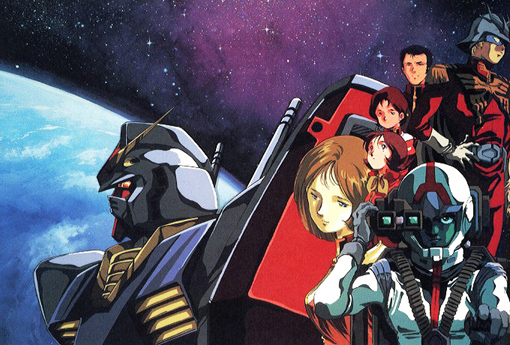
[IMAGE]This is intended to be the first of a multi-part series where I write about each major animated work in the Gundam universe. I want people to know what each of these shows has to offer.

About spoilers: I won’t tell you who dies, but this is a review of a 30-year-old show, for Pete’s sake. Anything I write about here has long since been analyzed frame-by-frame on 2ch.

Original Gundam

Mobile Suit Gundam, of course, is where it all began. The first Gundam show, which aired in 1979.

And that is the key aspect in appreciating this series. Mobile Suit Gundam (MSG) must be understood in its historical context. Before MSG, anime was aimed squarely at pre-teens and tweens. There was no anime aimed at teens or adults, except maybe Go Nagai’s cheesy giant robot shows, depending on how you squint at them.

Mobile Suit Gundam was aimed at mid-teens, as evidenced by its 15-year-old protagonist (in most anime series, the protagonist is the same age as the target viewer). Heck, the only characters younger than that are the comic relief orphan children.

(Only in Gundam do you have comic relief orphan children.)

MSG also strove for realism. In previous mecha series, the titular giant robots almost always had ridiculous backstories—designed and built by a single scientist, usually. Transformation sequences often made no sense; the vehicles that made up Getter Robo melt together to form the giant robot.

Not so in MSG. There’s certainly a magic technology—there has to be for giant robots to be practical—but it’s placed on a different level, behind that of the giant robots. MSG introduced Minovsky particles, an otherwise undiscovered element that makes compact fusion drives possible and jams radar. This makes hand-to-hand combat critical, especially for large vehicles. And when one side adapted the arm-and-torso construction machines originally used for colony construction into fearsome humanoid war machines, they suddenly found themselves with an ideal war technology for space combat.

(Think about it: You need huge construction equipment to build something as big as a space colony. The construction equipment needs to be highly flexible and powerful. What sort of controls do you put on a highly complex piece of equipment like that? You make it as humanoid as possible, since people can more easily map controls to human movements.)

This is what you get in great science fiction—the magic technology suggests technological innovations and historical responses.

The two sides of MSG‘s conflict also stand out. The Earth Federation—the “good guys”—is simply Earth’s government. It’s not particularly noble or just; in fact, it’s portrayed as bureaucratic and behind the times of modern warfare. The Principality of Zeon—the “bad guys”—objected to Earth’s control of a fundamentally new civilization in space, and declared independence. Not only are several Zeon characters sympathetic and noble, one of them became one of the most popular anime characters of all time, Char Aznable1.

Side note: Most folks see the Nazi-style uniforms of Zeon and read that Gundam’s creator, Yoshiyuki Tomino, wanted MSG to feel like the German offensive in World War II, and call Zeon simple stand-ins for Nazis. Saalon and I disagree. Zeon is much more similar to Japan in WW2; motivated by a zeal for independence against an economic powerhouse that they see as oppressive. While I’m sure Tomino originally intended Zeon to be like the Germans, I think he ended up creating Japanese. While the upper-level Zeon nobility are clearly power-mad, most of the other Zeon characters are portrayed as soldiers doing what they think is right.2

[IMAGE]

Characters, too, elevate MSG above other anime of the time. I can list four main characters who behave significantly differently by the end of the series. And others explicitly don’t change, to their detriment. I can’t think of any other anime with that much character change.

And those characters! A few highlights:

  • Ramba Ral is a fat Zeon military genius who travels with his wife, leading his men into ridiculously dangerous battles in one of Earth’s backwaters. Because he’s crazy like a fox; he knows that extreme daring inspires soldiers and throws the enemy off-balance. The sequence where he assaults White Base, corridor by corridor, presages Evangelion‘s assault on NERV HQ by fifteen years.
  • Garma Zabi is a driven royal teenager who’s been assigned an extremely safe area to hold, and desperately strives to prove himself. I felt bad for this proud, driven teenager, who could just sit back and enjoy the good life but insisted on doing something with his life, and suffered for it.
  • Then there’s Char Aznable: Charming, handsome, mysterious, an incredible pilot, and extremely successful. Then he kills one of his friends, and bursts out in triumphant laughter.

How can you not be intrigued by these people?

MSG accomplishes so much, especially in 43 episodes in an era when most anime had the barest thread of a story arc over the course of 50-odd episodes. Characters evolve (and some die), technology changes, and the war builds up to a fever pitch. Heck, the unexpected early cancellation of the series helped it, as the show focused on its end game for the last six episodes, and drove straight for it at full speed.

I distinctly remember watching a sequence about two-thirds through the show, in which the narrator explains the current Federation offensive against a major Zeon supply base. There’s a shot of White Base, followed by a shot of General Revil debating strategy options. I suddenly realized: I understand the overall course of the war, and the characters’ exact strategic role in that war, and I know what the characters are going through (and they’re going through a lot). I’ve seen this show only once (plus the recap movies), and I just turned to one side and rattled off the names of fifteen major characters. I know them that well. I literally can’t think of any other anime that accomplishes this much; even later Gundam series sacrifice one of these levels of detail.

Downsides? In 1979, the Japanese still hadn’t wrapped their heads (or their drawing hands) around fluid 2D animation. MSG can be painful to watch, unless you’ve seen a lot of Hanna-Barbera cartoons.

It’s also uneven. Tomino felt compelled to include a mobile suit fight in every episode, and at times they feel unnecessary.

But it’s worth it. Oh, it’s worth it, if just for the experience of this futuristic war story, and the great characters you’ll meet, and the choices they face.

1 Char’s popularity is according to polls in Newtype magazine, which consistently put Char Aznable in the Top 20 list of most popular anime characters.

2 See Of Space Nazis, Gundam Sequels and the Horribly Underated MS Igloo for an excellent analysis of the Nazi design aesthetic in Gundam.

I work for Amazon. The content on this site is my own and doesn’t necessarily represent Amazon’s position.