50 Games in 50 Weeks: Marvel Heroic Roleplaying

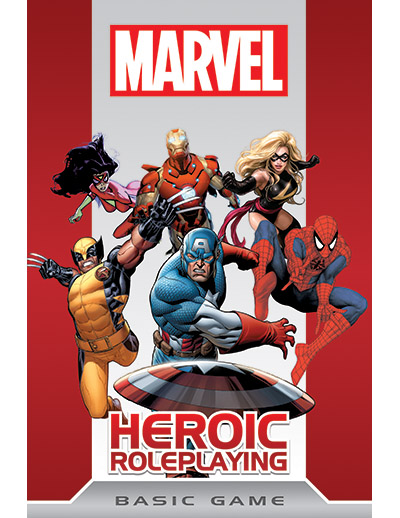
Marvel Heroic Roleplaying cover

Marvel Heroic Roleplaying © 2012 Marvel, Margaret Weiss Productions

Marvel Heroic Roleplaying is a new tabletop role-playing game that’s garnered a lot of interest lately, partly due to its impressive roster of designers and developers: Cam Banks (Smallville and Leverage RPGs), Rob Donoghue (Spirit of the CenturyDresden Files RPG), Matt Forbeck (Lord of the Rings RPG, Deadlands RPG), Will Hindmarch, and Philippe-Antoine Menard (The Chatty DM).

MHR takes an interesting mechanical approach: to perform an action, build a set of dice (a “dice pool”) from elements on your character sheet. Almost every rule centers around building that dice pool.

Contrast this with, say, Dungeons & Dragons, which has at least three different dice-rolling mechanics: attack rolls, saving throws, and skill checks. This means there’s a lot to remember, and many potential effects, but at least they all point to the same place.

The Core Mechanic

In Marvel, the dice pool is built out of four areas on your character’s sheet:

  1. Affiliations — How well you work solo, with a buddy, or in a team
  2. Distinctions — Three taglines that define your character. If a distinction applies to the situation, you can grab a d8, or use it at a disadvantage by grabbing a d4 and getting an extra Plot Point (more on those later). You can use several of these, if they apply.
  3. Power Sets — Your powers, like claws or energy blasts. You can use several of these, if they apply.
  4. Specialties — Skills, like medicine or acrobatics. You can only use one of these per dice pool.

You choose your dice out of each of these areas. If you have Plot Points, you can spend them for extra dice (and other things, but more on that later). You roll all your dice, and here’s where things get interesting:

You add two rolled dice together for your result (bigger is better). You then choose another die for the effect, but it’s the number of sides on that die that are important, not what you roll on it. So, if you roll poorly on a many-sided die, you’ll probably use that as your effect die.

The result is compared against the opponent’s result to determine if you succeed. If you do, the size of the effect die is the size of the damage dealt.

Stress

Here’s where things get weird if you haven’t played, say, Savage Worlds. Each character has three stress tracks: physical, mental, and emotional. Each stress track is tracked by die size. If you’ve never experienced this, imagine a stress track with five slots labeled 4, 6, 8, 10, or 12. If you choose a d6 as your effect die, then the opponent would shade in the 6 slot on his or her stress track, and would have “6” (or, in Marvel‘s parlance, “d6”) of stress.

An example: Cyclops is facing off against Venom. Cyclops’s player builds his dice pool, using Cyclops’s Optic Beam power, and ends up with a result of 15, with a d8 effect die. Venom rolls a result of 12, so Cyclops blasts Venom with his optic beam. Venom now has d8 of physical stress.

If a character goes above d12 stress on any track, he or she is knocked out.

Plot Points, Opportunities, and The Doom Pool

There are three other major elements to the system: Plot Points, Opportunities, and the Doom Pool.

Plot Points are player resources that can be used in many ways to build up a character’s dice pool. Plot Points can be used to add a d8 to a power, activate a special effect on a power, add more effect dice, etc. The “cheat sheet” that comes with Marvel lists 12 things players can do with Plot Points.

Opportunities are triggered whenever anyone rolls a 1 on any die. If a player rolls a 1, the Watcher (GM) can offer the player a Plot Point. If the player accepts the Plot Point, the Watcher adds a d6 to the Watcher’s Doom Pool (or swaps an existing Doom Pool die for a larger die). On the other hand, if the Watcher rolls a 1, a player can spend a Plot Point to get various bonuses: an extra d8 for the next dice pool, a larger effect die, etc.

The Doom Pool is kept by the Watcher (the Game Master). The Doom Pool starts with two d6s, and increase as the players roll 1s and accept Plot Points. In practice, the Doom Pool grows rapidly. The Watcher can add Doom Pool dice to any of his dice pools as desired.
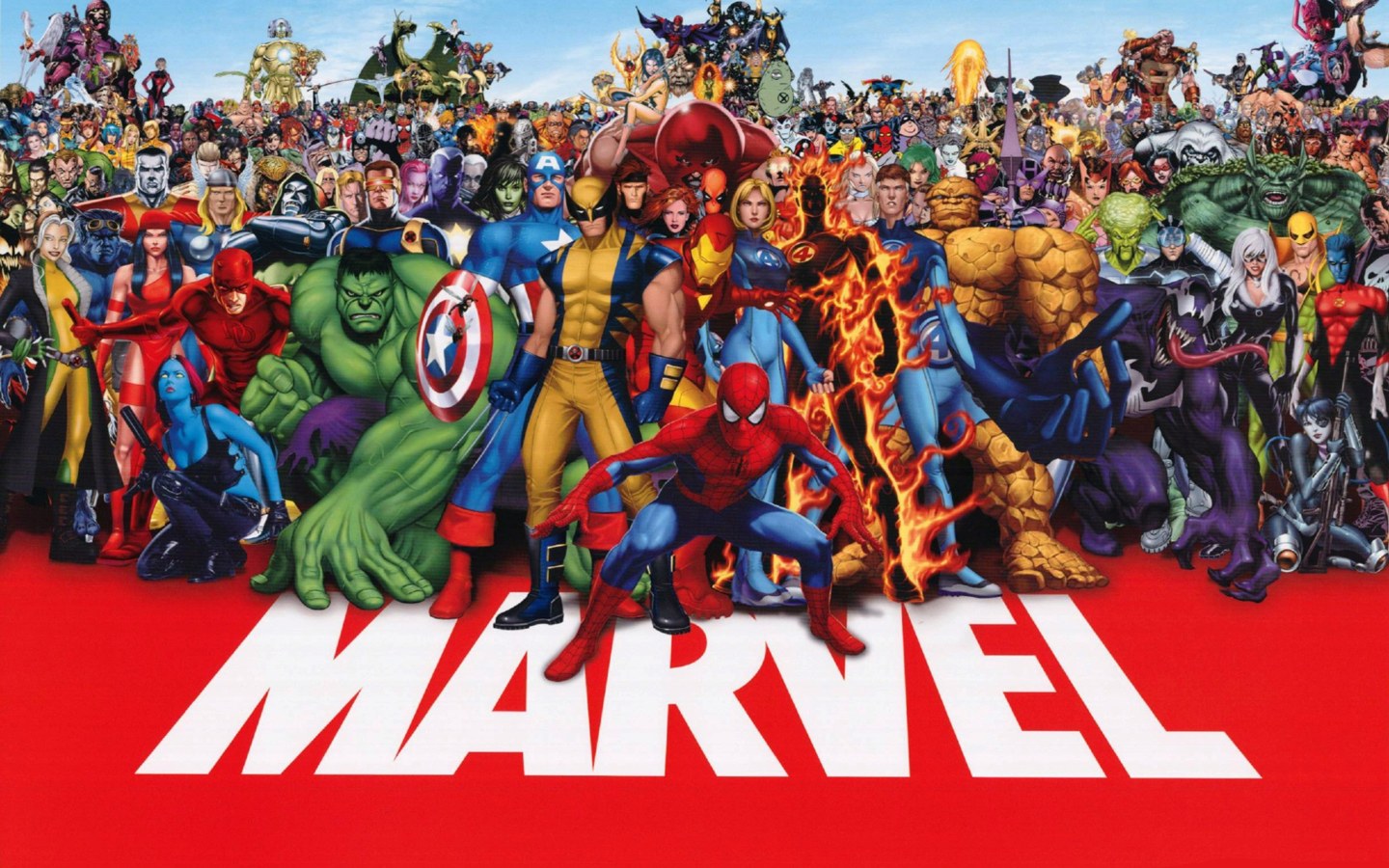
Marvel Heroes

© Marvel

How Well It Works

There’s a lot more to the system than this, and that’s the primary thing to know about Marvel Heroic Roleplaying: you’re not going to grok the system in one session. There are too many rules and exceptions, all of which affect the construction of dice pools. Everything modifies the one core mechanic.

However, you will absolutely be able to play Marvel in one session. It simulates American superheroes beautifully, and within an hour you’ll be constructing dice pools with ease.

During my first game, I had a grand time. I ran a modified version of the “Breakout” event listed in the book. The players were able to use their characters effectively. The mechanics supported play of the characters.

Events

The basic rule book provides an event called “Breakout.” It’s a two-part story intended to be told over two sessions, but each part can also be run solo.

The event structure provided in Marvel is better than anything else I’ve seen.

Each event has several Milestones. Side explanation: Each hero has two character-specific Milestones that he or she can pursue. Performing certain actions that fall within the Milestone gets the character Experience Points (XP). Each event has its own Milestones, and characters can choose to pursue those Milestones instead of their own.

Moreover, each event has “unlockables” which can be “bought” for XP. So, if a character gains 5 XP, he or she can unlock extra help or information to further the story along.

From there, the book describes various locations involved in the story, and Scene Distinctions (another element that you can use to add dice to your dice pools) that apply to those locations.

The book then lists suggested starting places for various heroes. In this case, the action centers around a prison for super-villains in New York’s East River, so Matt Murdock is visiting as a lawyer, Captain America is flying overhead on his way to a security conference, Peter Parker and Tony Stark are on business in New York, the X-Men are on a pier investigating a tip, etc.

The book goes on to describe the action of the event, along with stat blocks for each villain. It’s basically a series of encounters, but only the final encounter is required. All the others are treated as optional encounters, with plenty of options and ideas to power the conflict up or down (such as extra villains, innocent bystanders, or additional environmental problems).

It’s beautiful. It provides so many options that it’s easy to pick a direction, but none of it kills the game. The book assumes that the Watcher is smart enough to adjust if the game’s going poorly.

Conclusion

I love this system. It’s easy to play and easy to run. The rules provide enough complexity to let smart players gain significant advantages, but it’s not so complex as to be inscrutable or confusing. It takes a while to fully understand all the bonuses and effects, but you can have great fun with even a basic understanding of the system.

Brent’s Victory Garden: Seed status

I planted a few tomato and onion seeds in pots indoors this year. Here’s how they’re doing.

[iframe_loader width=”500″ src=”http://www.youtube.com/embed/x0WCnphV3ow” frameborder=”0″]

Because I need a new project: Brent’s Victory Garden

Today, I’m launching a new project: Brent’s Victory Garden.

It’s part how-to and part documentary on backyard gardening in the 21st century. I’ll be posting videos (one every two weeks) about planting and growing vegetables (and other plants) in my tiny backyard plot.

The idea is to promote vegetable gardening for everyone–that you don’t need a farm or eight hours a week to successfully grow vegetables or otherwise maintain a small garden. I want people to feel confident that they can dig up some grass and plant a few veggies.

So, here’s the first video: a quick how-to guide on growing plants from seed.

[iframe_loader width=”450″ height=”259″ src=”http://www.youtube.com/embed/2S4M-NhRafg” frameborder=”0″]

50 Games in 50 Weeks: Horrific, Terror in the Cards

Horrific: Terror in the CardsWhile browsing a local game store’s dusty bargain bin, my hands pulled out a couple decks of cards. Each was adorned with a tiny yellow price tag proclaiming, “$1.” The decks were part of a card game, Horrific: Terror in the Cards. According to the back of each deck, each player in the game plays a villain in a small town, trying to corrupt townspeople into minions, while turning the rest of the town’s inhabitants against the other players. It’s a terrific concept for a card game, so I bought the decks immediately.

Each player gets a deck of cards specific to the character being played: The Doktor, the Lord of Bones, etc. Each deck also comes with tokens for townspeople, who each have three stats.

The players begin by spreading out all their townspeople into one big sea of corruptible humans.

Play proceeds as follows: On your turn, draw 5 cards from your deck, place one card in your reserve (face-up, near you), and either play one card or place that card into your reserve as well. You can also play as many cards from your reserve as you want. When done, draw enough cards to have 5 in your hand, and adjust your trust.

Trust is the most important resource to manage, and is represented by a pile of coins, beads, or anything else that comes to hand (for my game of Horrific, we used paper clips). You need trust to perform certain actions (and, in some cases, to win the game), but when you corrupt townspeople or otherwise deal in nefarious dealings, you lose trust.

Each card lets you do something when played: turn a townsperson into a minion, turn a minion into undead, do good works in the town to gain trust, spread lies about another player to lower their trust, etc. Each player has a unique goal, which is visible to all other players.

And that’s about the entire game. Your goal may be to create a certain number of undead minions; another may just need to corrupt a certain number of townspeople.

Interestingly, you can accomplish your goal without screwing the other players. You don’t have to constantly plot against the other players. My game included stretches of straight playing towards our goals, and occasional “fights” where we were trying to bring each other down.

As a result, you can play the game as an intense competition full of backstabbing, or you can push hard towards your goal.

The mechanics are simple enough to grasp within half a game, but the different decks introduce variation; the Lord of Bones may be played by a devious genius in one game, and not appear at all in the next.

The artwork is creepy but not gory, appropriate for tweens and up. Indeed, this strikes me as an excellent game for teenagers, especially boys.

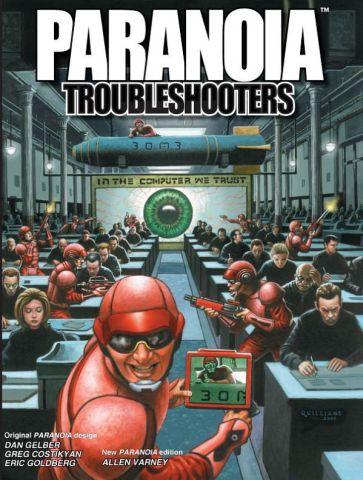
50 Games in 50 Weeks: Paranoia

Paranoia RPGRPG players are conditioned to view PC conflict as an absolute bad. So how can I describe the fun of an RPG that assumes players will attempt to kill each other at every session?

Paranoia is set in a 1980’s dystopia where Friend Computer directs humanity with a scented iron fist. It’s 1984 crossed with Discworld.

The player-characters are all troubleshooters (“tasked to find trouble and shoot it”), given a job by Friend Computer to resolve some minor problem. Of course, failure to comply is treason and subject to immediate death. Your job is typically to track down commies, mutants, or traitors.

Unfortunately, you’re also secretly a commie, mutant, or traitor. Or all three.

Fortunately for you and unfortunately for your comrades, they’re all probably commies, mutants, and/or traitors, and you’ll get points with Friend Computer if you expose them and eliminate them before they do the same to you.

Your character gets a large array of interesting and goofy stats, and to use them, you roll a d20 in hopes of rolling at or under your stat’s score. There’s little in the way of damage; the weapons with which Friend Computer provides you rarely leave much residue.

Our group didn’t roll much; we were too busy dealing with an unfamiliar sewer transport, a surprise loyalty test, and of course, accusing each other of treason. The GM handled most of the rolls.

I had great fun playing Paranoia, but it was a very particular kind of fun. I felt “inside the action” more than I do in a typical beer-and-pretzels game, but I wasn’t taking any of it seriously.

It’s an odd game. A memorable, weird, hilarious, crazy, fun, odd game.

What publishers will look like in 20 years

'Kindle3 Kindle Fire "on" button' by kodomut on Flickr

'Kindle3 Kindle Fire "on" button' by kodomut on Flickr

It’s hardest to see the future when the present is shifting so much. However, we can see clearly if we look at fundamentals and clearly understand the nature of change.

There are 3 major individuals or groups involved in book publishing:

  • Authors (usually one person, the creator)
  • Publishers (which include a long chain of people, which all process the author’s work)
  • Distributors (who get processed books to readers)

Electronic publishing is changing that. People assume that it’s killing publishers. That’s wrong. It’s killing distributors.

It’s obvious when you unpack the publication process. What do publishers do?

  1. Copyediting — Fixing typos and grammar mistakes, and re-arranging sentences so they flow better.
  2. Editing — Suggesting changes to the flow of information in the text, to improve the story’s speed, comprehension, etc.
  3. Layout — Choosing typefaces, deciding on the layout of chapter headings, etc.
  4. Cover art — Still important; books need an encapsulating image to catch a reader’s eye.
  5. Printing — Physically producing the finished books.
  6. Advertising — Buying ads in magazines and newspapers, sending review copies to reviewers, pushing on social media, etc.
  7. Broader marketing — Very different depending on the author and book, but can include arranging book tours, producing online videos, etc.

Electronic publishing affects one of those seven activities (with minor effects on some others).

Electronic publishing on Amazon’s Digital Text Platform, Barnes & Noble’s PubIt!, and others allow an author to bypass the publisher’s process. This does not make those steps worthless; it makes them optional.

So: publishers will not be primary gatekeepers. They will still have a place.

To see the future of electronic publishing, think about The New Yorker. Even in a world of free publishing, it would still mean something to be published in The New Yorker.

So a publisher’s value will lie in its exclusivity and taste. People today will follow a blogger for recommendations; so will people 20 years from now follow publishers for their catalog.

Let’s imagine the website for an electronic publisher named Clio, 20 years in the future. Their main page lists the titles that they have available. The first thing of note is the relatively slow publication schedule. Clio intentionally releases only a few books a month, all of very high quality.

But now let’s click on their “Why Publish With Clio?” tab. We see a page explaining that Clio offers a full range of copyediting, editing, layout, artistic, and marketing services.

If you submit your manuscript to Clio (right from their website, of course) you’re sent to a web page that shows your manuscript’s exact place in the review queue, and estimates the number of days until your manuscript is reviewed. If your manuscript makes it through the review process, editors and marketers will polish it (with your input and acceptance, of course). All these services will be paid back by a small commission from sales of your book; once they’re paid back, you only pay a trivial amount for ongoing hosting fees.

You also select a marketing plan. You can do all the marketing yourself and pocket all the rest of your books’ profit, or you can have the publisher market for another small, ongoing commission. You can even change the marketing agreement later.

It’s all do-able, and it provides all the advantages of a traditional publisher with few of the drawbacks. It not only gives publishers a place in the market, it gives them a clear place.

50 Games in 50 Weeks: Space Hulk: Death Angel

Space Hulk: Death AngelYou are a space marine, a heavily armored and incredibly powerful warrior searching an abandoned ship for deadly, xenophobic aliens. Unfortunately, they will find you.

This is represented in a card game.

And that’s the yin and yang of Space Hulk: Death Angel. The basic idea–marines assaulted by aliens as they traverse a space ship–captures the imagination, but it’s complex and awkward to represent with cards.

The players each control a couple of marines, all of which are in the same squad. Other cards represent the ship corridors that the marines are exploring, and the aliens attacking them. Special dice are rolled when marines attack; each marine attacks in his own way.

Explaining the mechanics in detail would be dull and futile. It took me and a friend over an hour to understand the rules, and he’d played the game before. In particular, we scratched our heads over the rules for navigating through the ship and finishing the mission.

That said, Death Angel captures the claustrophobic terror of its premise. Several moments drew apprehensive groans from us both. I felt myself breathe stale air, smell fear, and feel the butt of my rifle jam into my shoulder.

I just wish I could figure out where I was on the damned ship.

Please do not buy candy from Munchies Sweets and Treats

Bottom line up-front: I ordered a bunch of candy from Munchies Sweets and Treats, only received half, and they’ve ignored my requests for the rest of the candy I paid for.

Candy BarsThis past Halloween, I wanted to buy a bunch of full-size candy bars for the trick-or-treaters. It’s always fun to see their eyes bug out when I offer them a pail full of big candy bars. And I figured I could buy them in bulk.

After an hour of Googling, I found Munchies Sweets and Treats <munchiessweetsandtreats.com>. They had low prices and a large selection. Perfect! I ordered my bars, plus about a dozen unusual candies I can’t get in my area. The total came to a little over a hundred dollars. I gulped, and clicked “submit” on my order.

A week later, a large box arrived. I hauled it into the kitchen, split it open, and found most of the full-size candy bars, but none of the unusual candies. Inside was a packing slip, with all the candies I’d ordered listed.

I though, Well, maybe they’re shipping in two boxes. I waited a couple of days. No second box arrived.

:sigh: Okay, well, their materials listed a phone number. This was undoubtedly a mistake; I’d just call them and get the rest of my order. I dialed their number, and the call went straight to their voiccemail.

Which was full.

Now that’s an ominous sign.

I returned to their website. They had no live chat, but they did have a contact form. I filled that out, explaining that half my candy was missing from my order.

Need I say more?


50 Games in 50 Weeks: Fudged Mouse Guard


Image from 'Mosue Guard,' copyright David Petersen

Image from 'Mosue Guard,' copyright David Petersen

My game group played Fudged Mouse Guard a few weeks ago. It takes the excellent Mouse Guard RPG–a game of intelligent mice with medieval-level technology–and converts the system to Fudge (every stat is a score from -4 to +4, and you roll dice that modify your score up or down for a final result, which is compared to a target difficulty).

The original Mouse Guard system is a simplified and heavily modified version of the odd Burning Wheel system. The conversion to Fudge can’t be exact.

It isn’t, but Fudged Mouse Guard fits the world well, and converts all the important statistics. We were able to play in the Mouse Guard world effectively, using skills and abilities, and combat involved simply trading blows. It works.

I did encounter one problem: The Fudged Mouse Guard document lists no example enemies, and provides no guidelines for enemies’ power level. I guessed at the stats for enemies, which turned out to be low. The PCs defeated all their enemies within three rounds. The original RPG’s unique combat system doesn’t translate directly to a traditional RPG’s mechanic of trading blows, so more direction there would be helpful.

Overall, though, the game went smoothly and we had fun. You can view our character sheets to see the stats used in the system.

Foursquare is about visiting places; Schemer is about doing things

Schemer.com screenshot

Schemer.com screenshot

The peerless Trey Ratcliff was kind enough to offer invites to Schemer, a new Google service, and I was lucky enough to win one. Thanks, +Trey!

Jennifer Van Grove emphasized Schemer’s similarities to Foursquare in her VentureBeat article, but I see Schemer as more of a location-sensitive bucket list.

Foursquare is about visiting places; Schemer is about doing things.

Ignoring the home dashboard, Schemer’s biggest attraction is its “Find Stuff To Do” page. Here, you’ll find a list of projects (“schemes”). All of these projects were made by (or marked by) people in your Google+ Circles, or who live or work near you. It’s not creepy; it doesn’t suggest that you do the same things as your next-door neighbors. But if you live in Seattle, most of the projects listed for you will be either based in Seattle or not location-specific (e.g., “Knit a sweater”).

So, you can create a project (“Make my grandmother’s fudge cheesecake recipe”), or mark an existing one as “I want to do it” or “Already done it.”

You can also leave comments on projects (sorry, “schemes”), and this is one of the site’s most exciting features. If it can collate advice from people who’ve already done something, it could be a powerful way to help people achieve their goals.

There’s already an Android app available, with an iPhone app “coming soon.” I have no Android phone, so I can’t comment on that.

So, the big question: Is Schemer worth using? As a bucket list, yes. This is a fine way of tracking larger concrete life goals.

If you’d like an invite to Schemer, leave a comment and I’ll give ’em out as long as I’ve got ’em.

I work for Amazon. The content on this site is my own and doesn’t necessarily represent Amazon’s position.