Archive for June, 2010

Your Focus Needs More Focus

Jun 29 2010 Published by under Self-improvement

LOOK AT ME WITH STARRY EYES PUSH ME UP THE STARRY SKIES

by Niffty.. on Flickr

This line from the 2010 remake of The Karate Kid (“Your focus needs more focus”) has been spinning about my head lately, as I went through another round of reducing my active projects.

Great things come through focus. Demonic focus, as Tom Peters calls it.

But focus doesn’t mean 18 hours of work every day. It means concentrating on one and only one thing at a time.

Now, I’d be the last person to suggest that you should only do one thing forever. I love accomplishing many different creative projects over time.

But I’ve found that I need to be able to put aside all projects but one, and focus on the next deliverable, and concentrate on that until it’s done. Then move on to something else.

And this doesn’t mean that I spend every waking hour working on that one project. I’ll also read, and watch movies, and work in the garden, and play RPGs on Google Wave.  I’ll still very much take care of the little things.

The big things take focus.

No responses yet

Dungeons and Dragons and Giant Robots, part 3

Jun 25 2010 Published by under Role-playing

In the first post in this series, I laid out some basic ideas for a role-playing system for playing in giant robot universes, using a straight port of the D&D 4E system. In the second post, I defined basic stats and attributes for PCs and their mecha.

Today, I’m going to lay out the stats needed for a mecha, and the stats needed for a PC:

Mecha Character Sheet

  • Name
  • Manufacturer — Corresponds to race
  • Class
  • Size
  • Speed
  • Initiative
  • Defenses
    • AC
    • Fortitude
    • Reflex
  • Ability Scores
    • Strength
    • Constitution
    • Dexterity
  • HP
  • Sparking
  • Repair Value
  • Repair Operations Per Day
  • Weapons
  • At-Will Powers

While we’re at it, let’s define a PC sheet:

Player Character Sheet

  • Name
  • Level
  • Military Organization
  • Class
  • XP
  • Speed
  • Initiative
  • Defenses
    • AC
    • Fortitude
    • Reflex
    • Will
  • Ability Scores
    • Strength
    • Constitution
    • Dexterity
    • Intelligence
    • Wisdom
    • Charisma
  • Passive Insight
  • Passive Perception
  • HP
  • Bloodied
  • Surge Value
  • Surges Per Day
  • Action Points
  • Weapons
  • Skills
  • Feats
  • Encounter Powers
  • Daily Powers
  • Utility Powers

One response so far

Dungeons and Dragons and Giant Robots, part 2

Jun 25 2010 Published by under Role-playing

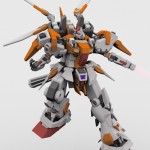
GundamIn my previous post on this topic, I suggested a few basic rules for a giant robot RPG system using the basic D&D 4E rules.

Let’s review the rules so far:

Mecha operate on a scale 10x that of the human scale. So, mecha weapons do 10x the damage of a human weapon, mecha are about 10x bigger than humans, etc.

Mecha combat occurs on its own grid, which does not represent individual human units.  Similarly, human-scaled combat does not show mecha units.

Pilot characters have all six stats, while mecha have only Strength, Constitution, and Dexterity.  Any mecha attacks targeting those three stats are assumed to be targeting the mecha’s stats, rather than the pilot’s.  All other attacks target the pilot’s stats.

Mecha have Reflex and Fortitude defenses, but no Will defense.

Mecha have at-will powers.  PCs have encounter and daily powers.

I’ve received some feedback suggesting that I keep full stats for both mecha and pilots.  It’s an interesting idea, allowing for attacks that target a mecha and different ones that target the pilot inside. However, if I do that, then the DM and players will have a much larger workload.  Each attack must specify whether it’s targeting a mecha’s defense or a PC’s defense, and DMs and players will have to keep track of all those stats.  I may go in that direction, but I’m going to hash out some examples before I decide.

Now, let’s talk races and classes.

Racial Profiling

D&D is built on the premise that the world contains many intelligent races. In contrast, most mecha anime series have at most one non-human race: Macross/Robotech has Zentraedi, Gundam Seed has Coordinators, and U.C. Gundam has Newtypes (if you want to push the concept of Newtypes that far),.

I can see two obvious solutions to this:

  1. Live with it. Any given mecha universe may only include one or two races.
  2. Replace race with military organization. You choose the military organization that trained you, and this affects your stats in the same way that race does in D&D.

I like the latter, so we’ll go with that except in universes that legitimately include several playable races/species.  So:

PC race is replaced with “military organization,” which reflects the military group that primarily trained the PC.

Class can remain unchanged.  Obviously, there will be different classes, but the mechanics will work the same.

What Species is a Giant Robot?

A mecha’s race must be represented by its manufacturer.  Different companies manufacture mecha to different specs.  Makes sense.

Class corresponds to the mecha’s intended role in combat.  Just like other military machinery fill certain roles (fighter vs. bomber), mecha have roles as well.  The term “class” makes sense for mecha, so we’ll keep that.

Mecha race is replaced with “manufacturer.” Class remains unchanged.

Okay, so race/class now falls out as follows:

  • PC Military Organization
  • PC Class
  • Mecha Manufacturer
  • Mecha Class

(I will note there that I dislike the term “class” in general. It’s vague, making it unhelpful; it might as well be called “category” or ”set.” Terms should add flavor to the world. I’d be tempted to replace PC class with “specialty” and Mecha class with “role,” but that would confuse all those D&D players out there.  And since this is meant to be a D&D 4E conversion, I’ll stick with “class.”)

Can a Giant Robot be Bloodied?

Le’ts fix a few naming issues while we’re at it.

Giant robots don’t get bloodied, and you don’t heal a 20-ton war machine. So:

The term “bloodied” is replaced with “sparking,” and the term “healing surge” is replaced with “repair operation.”  Mechanically, they work the same.

Confusion

This is getting complicated. Character creation in D&D 4E consumes enough time as it is. Now we have to generate a mecha, too?

Well, let’s make it easy.  The system description document will include a bunch of pre-generated mecha. Players can generate mecha from scratch if they want to, but beginners will be encouraged to just pick a pre-generated mecha.

So that’s more of a design goal: Develop a bunch of mecha for players to pilot.  In the next post in this series, we’ll create a basic blank sheet of stats and fields for mecha, as well as one for PCs.

No responses yet

Into the Jungle

Jun 22 2010 Published by under Miscellaneous

"Lion at sunset" by Rob Inh00d on Flickr

"Lion at sunset" by Rob Inh00d on Flickr

I’ve been trying to nail down one international trip this year.  Was trying to find a good trip to Greece or Italy, but every itinerary was jam-packed with activities. I wanted more freedom.  (Don’t we all?)

Then I saw a deal on a trip to Africa.

So, if all the paperwork goes through, I’ll be going to South Africa this October, from the 6th through the 15th.  I’ll be spending about half the time in Cape Town, and the rest in a game preserve, photographing wild animals.

It’ll cost a bit more than I had planned to spend on my trip this year — a bit over $4,000 on airfare, hotels, and all that — but, c’mon, it’s a week in Africa, staying at high-quality accommodations.  I’ll find a way to pay for it.

One response so far

New Floors

Jun 21 2010 Published by under Miscellaneous

"cherry" by erix! on Flickr

"cherry" by erix! on Flickr

This is a completely personal post.

I had new hardwood floors installed this past weekend, covering my entire upstairs and the stairwell.  It was expensive, but my house looks fantastic. Oddly, walking into an office with a cherry hardwood floor (even if it is laminate cherry) just feels right.

It also feels exhausting. I didn’t install any of it, but I had to prepare: moving 4 bookcases worth of books downstairs, as well as various delicate pieces of equipment, models, etc.  All the pictures had to come off the walls, too, and with several dozen framed anime cels, that took a while.  Afterwards, not only did I have to move everything back, a thick layer of sawdust covered all of it, so I had to clean it, as well.

Tired? Yes. Worth it? Absolutely.

Especially after seeing The Karate Kid. That’s one solid film: a strong and quiet story, involving actors, beautiful cinematography (is it just me, or have more films recently featured excellent cinematography?), and a moral philosophy that’s actually reinforced by the events of the film.

No responses yet

Dungeons and Dragons and Giant Robots, part 1

Jun 19 2010 Published by under Role-playing

Gundam Robot

Gundam Robot by kcherif on Flickr

Last weekend, Saalon and I discussed a straight conversion of D&D 4th Edition for a universe of anime-style “real robot” giant robot combat. So, more like the serious war stories of Gundam than the goofy fistfights of Gigantor.

Scales of War

The first problem is one of scale. Giant robots operate weapons that can pulverize many individual soldiers in one hit. So, let’s identify a rule:

Mecha operate on a scale 10x that of the human scale. So, mecha weapons do 10x the damage of a human weapon, mecha are about 10x bigger than humans, etc.

As a result, mecha combat cannot properly include individual human units, and mecha units are simply too large to represent accurately in human combat. Humans can be grouped into units large enough to represent at mecha scale, and mecha units may be representable as abstract forces, but for now:

Mecha combat occurs on its own grid, which does not represent individual human units.  Similarly, human-scaled combat does not show mecha units.

Okay, so you have pilots inside mecha.  Here comes our next big problem: the player controls both a pilot character and a mecha.  Do both get stats?  Do both get powers?  How does one influence the other?  Does a character’s Constitution really have any affect on piloting the mecha?  Even more, do we want to simulate reality that closely?  Should a mecha have a Will score?

First, let’s think about the six basic stats.  The three body-related stats — Strength, Constitution, and Dexterity — all make sense for a mecha.  The three mental stats — Intelligence, Wisdom, and Charisma — don’t.   So:

Pilot characters have all six stats, while mecha have only Strength, Constitution, and Dexterity.  Any mecha attacks targeting those three stats are assumed to be targeting the mecha’s stats, rather than the pilot’s.  All other attacks target the pilot’s stats.

For defenses, we’ll take a similar tack:

Mecha have Reflex and Fortitude defenses, but no Will defense.

Powers

How about powers?  Well, let’s think about them for a second.

At will power are everyday attacks and maneuvers.  They do a little more damage or otherwise provide a minor advantage over a straight gun shot or beam sword swing.

Encounter and daily powers are special moves, only used when the situation is dire.  Examples in anime include a Seed Break in Gundam Seed and Berserker Mode in Neon Genesis Evangelion.  Those are represented as special abilities that come from within the pilot.

So, here’s something different:

Mecha have at-will powers.  PCs have encounter and daily powers.

This actually works nicely with the standard level progression in 4E.  Mecha provide an array of first-level at-will powers; the basic stuff that this mecha is good at.  As your PC progresses, he or she picks up new maneuvers (encounters and dailies) that he or she can do regardless of the mecha piloted.

At some point, I’d like to add certain mecha encounter and daily powers that are only available to players at levels 10 or 20.  But for now, we’ll keep it simple.  Mecha only provide basic at-will powers.

More later as I think through this.

One response so far

Updating your WordPress Blog from WP 2.x to 3.0

Jun 18 2010 Published by under Technology

"Stairs" by moyogo on Flickr

"Stairs" by moyogo on Flickr

I’ve successfully migrated two WordPress 2.9 blogs to WordPress 3.0.  No issues.  Here are steps to follow to do so safely:

Phase 1: Backup

  1. Click on Tools > Export.  The ”Export” page is displayed.
  2. Click the Download Export File button.  A ”Save as” dialog is displayed.  Save the file on your desktop.
  3. Click on Dashboard.  Note the version of WordPress that you are running.  The version number is near the bottom of the ”Right Now” box.

Note that this will not backup plugins or themes.  For a more complete backup, also FTP to your webhost and download everything in your blog’s folder.

Phase 2: Upgrade

  1. Click the Please update now link that’s at the top of all your WordPress admin pages.  Alternatively, go to your dashboard, and click the Update to 3.0 button that’s displayed in the ”Right Now” box.  The ”Upgrade WordPress” page is displayed.
  2. Click the Upgrade Automatically button.
  3. Wait a few moments, until the text “Upgrade completed successfully” is displayed on the page.

You’re done!  Click around to make sure everything works okay.  View your blog to ensure that it still displays properly.

Phase 3: If Everything Goes Pear-Shaped

If your blog is somehow borked as a result of this:

  1. Re-install a 2.x version of WordPress.
  2. Log in to your blog.
  3. Click Tools > Import.  The ”Import” page is displayed.
  4. Click the WordPress item near the bottom of the ”Import” page.
  5. Click the Browse… button.  An ”Open” dialog is displayed.  Select the file that you saved in phase 1, and click the Open button.  The ”Open” dialog disappears.
  6. Click the Upload file and import button.  All the content in the backup file should be imported back into your blog.

If you followed the FTP step in phase 1, navigate to the files you downloaded, and copy everything in the plugins/ folder to the plugins/ folder in your WordPress installation.  Do the same thing with your themes/ folder.

No responses yet

Snap

Jun 17 2010 Published by under Miscellaneous

I just bit into a green bean, picked fresh from the box out back.

I am 10 years old. I’m shucking corn on the tiny deck outside my parents’ kitchen. Errant strands of corn silk float lazily through the air to hang on the azalea bushes below. Inside, we have chicken cordon bleu with big, yellow ears of corn and green beans. Slabs of butter slide, kernel by kernel, down the corn to collapse, exhausted, on the clean white plate.

We devour the meal. Afterwards, Mom strides out of the kitchen holding a chocolate cake. The cicadas sing. This is summer.

No responses yet

Visual Novels

Jun 16 2010 Published by under Reviews

As part of a Top Secret Project, I bought and have been playing several Japanese visual novels lately.

(For those unfamiliar: a visual novel is something like a graphic adventure. The canonical example is a high school dating simulation, where the player talks with several girls in his class over the course of a few weeks, and whomever he spends the most time on becomes his girlfriend at the end. This is usually accompanied by a few scenes of the protagonist and the girlfriend having sex, to satisfy the [typically male] player’s prurient interests.)

Tokimeki Check In

© Crowd

I’ve read that visual novels have evolved from thinly-veiled opportunities to see cute anime girls naked into full-scale stories of blossoming young love. Based on my experience, it’s true. There’s been very little erotic content in any of the games I’ve played (thus far).

Tokimeki Check-In, for example, is a classic dating sim, so the characters have that 1980′s anime feel. The protagonist runs a mixed-gender hot springs spa, so there are various opportunities to accidentally see girls naked. As a result, it’s a less interesting game than the others, as the point of the game is, erm, rather obvious.

Snow Sakura

© G-Collections

Snow Sakura, on the other hand, is a modern dating sim, where the protagonist has moved to Hokkaido (the north-most island of Japan), and is shivering through his first winter there. He’s surrounded by cute, odd girls. While it’s more of a traditional romance, the girls’ stories are revealed slowly, and the player gets plenty of time to appreciate each girl’s unique personality.

That’s one of the things I really appreciate about these games–it’s not just a few goofy scenes of high school life followed by sex with a girl.  You spend some time with each girl establishing what you like about them, and genuinely falling in love with them.

Moreover, Snow Sakura is much more of a comedy. It’s genuinely funny.

Yo-jin-bo screenshot

© Two-Five

Yo-jin-bo tells the story of a modern girl transported to Edo-era Japan. It’s a reverse harem series (a girl surrounded by cute guys), but more importantly, it appears to have the most intricate story of this set. The player has very little to do; even the limited, multiple-choice questions are few and far between.  Moreover, this is a strictly PG-rated game. As a result, the show concentrates more on personalities and story than anything else.

Overall, I’m impressed.  There are some genuinely good games out there.

No responses yet

Five Awesome RPG Systems You Should Check Out

Jun 14 2010 Published by under Role-playing

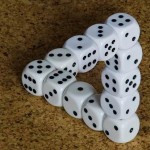
Dice illusionRole-players tend to find their “favorite system” and stick with it. While they’re more open-minded about other systems than, say, programmers are about languages, they often avoid new systems in favor of the familiar.

So, here are 5 role-playing systems that are worth checking out:

Fudge

Technically, Fudge is a toolkit for making a system. The basics are brilliantly simple:

Every character’s attributes, skills, abilities, etc.–whatever you want to call them–are represented on a simple linear scale, from Terrible through Average to Superb.  Each step on this scale has a number (-4 to +4) and a term (Poor, Fair, Good, etc.).

To swing on a rope over a burning building to safety, you choose your character’s most relevant attribute–in this case, Acrobatics or Athletics or Dexterity or whatever–and you roll Fudge Dice.  These are four dice, painted with sides containing +1, -1, and 0.  Let’s say I rolled +1, -1, +1, 0.  That’s a total of +1. Take the results and add them to the attribute’s value, and that tells you how well (or poorly) you succeeded at the action.  That’s it.

So, if I’m Good (+2) at Acrobatics, and I roll my Fudge Dice and get +1, I was Great (+3) at swinging over the burning building.

FATE

FATE takes Fudge and adds a literary hero vibe.  Characters are created by dividing the character’s past into several major eras (childhood, young adulthood, the War Years, etc.), and for each era, defines one major Aspect that defined the character during that period (working as a bounty hunter, association with the Black Hand, learning to hack, studying at the Temple of Pages) and the skills learned during that period.

Characters also have Fate Points, which they can use to change fate.  This ties in beautifully with Aspects–the GM can bid to use one of your character’s Aspects to get the group in trouble (for example, your Expert Gambler aspect tempts you to wager everything on a game of cards). You can spend a Fate Point to resist this twist of fate, or allow it to happen and receive an extra Fate Point.  Fate Points can also be redeemed to essentially guarantee success on dice rolls.

This explicitly encourages flawed characters. The more flaws you have, the more Fate Points you build up, which allows you to succeed wildly when it counts.

Houses of the Blooded

An indie game of political intrigue. In a sense, this is more of a setting than a system. You play one of the Blooded, a race of magically and genetically modified humans who now rule humanity (some benevolently, others less so) in a pre-historical feudal age.

Its creator, John Wick, describes Houses of the Blooded as a reaction to D&D.  Well, I’ll just quote him:

Almost everything that’s true about D&D is untrue in this game. In D&D, the most common kind of character is a wandering nomad who lives outside the law, an adventurer roaming the countryside, killing monsters, gaining treasure and weapons so he can kill bigger monsters….

In Houses, you play a noble. A character with a past. A character with a family, with vassals, responsibilities and duties. The Law is an ever-present factor in your life….”Treasure” really has no value for you and problems such as ”wandering monsters” are problems for someone of lesser status to handle….And rather than living in a bubble immune to the effects of political scheming, your character lives in a world that looks like a bastard child of Tanith Lee and Niccolò Machiavelli.

But this is not a game of drawn-out conversations. Your character actively pursues goals. But those goals are far more complex than clearing bugbears from a town.

Dread

I’ve run this game several times, and it’s always been a blast.  I think I’ve blogged about it before, but I’m going to blog about it again.  It’s that effective.

It’s a game of one shots and high body counts.  Only one character survives the session (sometimes not even one).

Character creation involves answering a series of invasive questions, such as, “Why do you keep carrying that thing in your pocket?” and ”Why does your father hate you?”  Each questionnaire is specific to that player.

The mechanic is a Jenga® tower. Really. Every time a character attempts some difficult action, the player must make a pull from the Jenga tower, according to standard Jenga rules. A very difficult action requires two pulls.

If a player knocks over the tower, that player’s character dies. If a player intentionally knocks over the tower, that player’s character succeeds at whatever he or she is trying to do…then dies.

When the tower’s rebuilt, the GM makes three pulls for each dead character.

Here’s the genius: it takes an hour or two before the first death. But the next death comes more quickly. So the longer you survive, the greater the danger.

It’s an impressively tense game, ideal for survival horror.

Primetime Adventures

This is a simulation of a TV show, particularly a drama. If you want to play Buffy: The Vampire Slayer, The O.C., or E.R., this is the system.

It centers on the idea of drama. Each player is a character in the drama (except for one player, the Producer), and the drama is divided up into episodes and scenes. The system determines which characters have most “face time” during each scene, and the players collaboratively decide what happens during that scene. Compared to a traditional RPG, there’s far less random chance and far more discussion about what would be the most interesting plot twists.

As a result, Primetime Adventures doesn’t play like a traditional RPG. You’re building a series of TV episodes, really. It’s more abstract than a D&D game; you don’t hear the screams of combat or feel the hilt of your sword; you think about drama and suspense.

If nothing else, it broadens your mind.

Hope this helps!  Do you have any favorite systems you’d recommend? Let me know in the comments!

One response so far

Next »